



The Aqua Virgo Aqueduct: Daily Life i& Power n Ancient Rome
The Lifeblood of Empire: How the Aqua Virgo Shaped Roman Society and Survival
01 January 2026
Rome Travel GuideThe Aqua Virgo Aqueduct: Water, Power, and Daily Life in Ancient Rome
In ancient Rome, water was not simply a natural resource, it was the foundation of daily life and a visible expression of power. At the height of the Roman Empire, Rome was a vast and overcrowded metropolis, home to around one and a half million inhabitants. Supplying such a population with clear and drinkable water was an enormous challenge. The Tiber River, muddy and often polluted, could not meet the city’s needs. Instead, the Romans relied on a sophisticated system of aqueducts, engineered to bring fresh water from distant springs directly into the urban fabric. Among these, the Aqua Virgo aqueduct stands out as one of the most enduring and historically meaningful.
Today, parts of the Aqua Virgo can still be seen during a Trevi Fountain Underground Tour, at the archaeological site of the Vicus Caprarius, also known as the Città dell’Acqua (City of Water), where sections of the ancient channel and water basins reveal how the aqueduct was distributed within the urban fabric of Rome. These underground remains make visible the continuity of the Aqua Virgo, still flowing just beneath the modern city. To see these architectural wonders firsthand and explore the hidden depths of the city, you can join our Private Trevi Fountain Underground Tour.
How Roman Aqueducts Supplied Ancient Rome
In Rome and throughout the empire, water was closely tied to political authority. The abundance of flowing water symbolized prosperity, order, and Roman superiority. Aqueducts supplied public fountains, private houses, workshops, gardens, and—most importantly—public baths. Ensuring a constant supply of clean water meant controlling one of the most essential resources of urban life. For emperors and magistrates, maintaining aqueducts was a powerful way to gain popular support and to present themselves as guardians of the city’s well-being.
The Aqua Virgo Aqueduct: Length, Gradient, Advanced Engineering
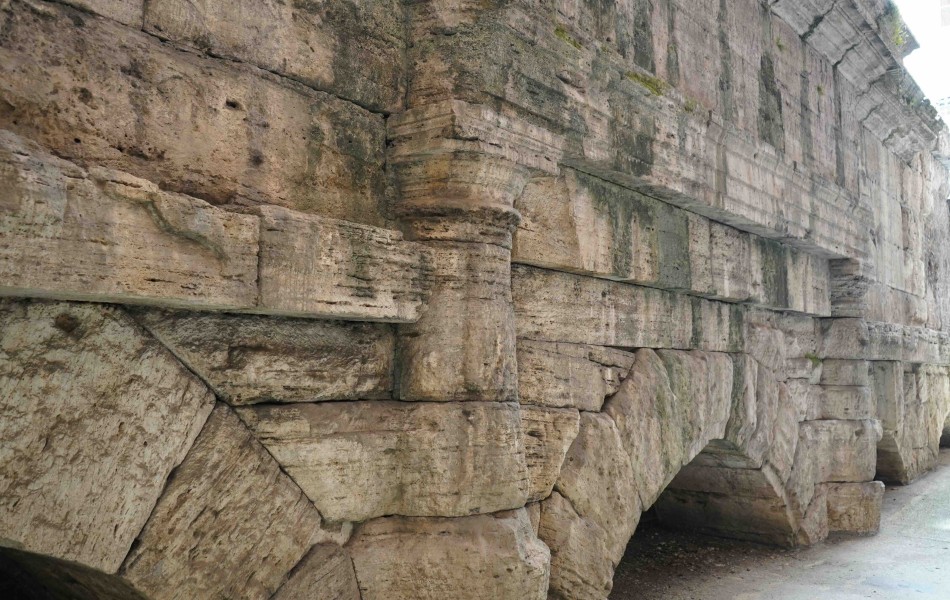
Roman aqueducts were masterpieces of practical engineering. Surveyors carefully selected reliable springs and traced routes that allowed water to flow entirely by gravity, with a slope so gentle it was barely perceptible. Most of the channel ran underground, protecting the water from contamination and keeping it cool. Where valleys or roads interrupted the route, the aqueduct rose on arches—structures that still define the Roman landscape today.
Inside the channel, water flowed through stone-lined conduits large enough for workers to enter. Vertical shafts opened at regular intervals allowed for inspection, cleaning, and repairs. Aqueducts were not static monuments, but living systems that required constant maintenance—an effort only a highly organized society like Rome could sustain.
In the specific case of the Aqua Virgo aqueduct, the system stretched for approximately 20 kilometers (about 12 miles) from its springs east of Rome to its destination in the Campus Martius. Over this entire distance, the water dropped by only a few meters in total, resulting in an exceptionally gentle gradient of roughly 30 centimeters per kilometer. This minimal slope allowed the water to flow steadily by gravity alone and helps explain the aqueduct’s extraordinary durability over time.
Augustus, the First Roman Emperor, and the Expansion of the Campus Martius
The Aqua Virgo was built in 19 BC at the initiative of Marcus Vipsanius Agrippa, the close associate and son-in-law of Augustus. Its construction formed part of a broader program of urban renewal promoted during the early Principate, aimed at improving public infrastructure and enhancing the quality of life in the capital.
The aqueduct was designed to supply the Campus Martius, which was not the political heart of Rome—that role belonged to the Roman Forum—but rather a vast area of urban expansion during the late Republic and early Imperial period. Roughly corresponding to the area between today’s Piazza di Spagna, the Pantheon, and Piazza Navona, this district became increasingly built up with baths, temples, porticoes, and public spaces. Supplying this growing part of the city with fresh water was essential, and the Aqua Virgo played a key role in supporting everyday life and leisure in this expanding imperial landscape.
Water and the Imperial Baths
The importance of water became most visible in the imperial baths (thermae). These places were vast social complexes with hot and cold pools, exercise areas, gardens, and libraries. Thousands of Romans visited the baths every day. Aqueducts like the Aqua Virgo supplied the enormous quantities of water required to keep these complexes functioning continuously. Through the baths, water entered daily life as comfort, hygiene, leisure, and social interaction, reinforcing the idea that Roman civilization was built on abundance and organization.
The Ancient Architect Vitruvius and Roman Ideas of Infrastructure
Our understanding of Roman engineering and architecture is deeply shaped by Vitruvius, a Roman architect and engineer of the 1st century BC. He authored De Architectura, the only complete architectural treatise from antiquity to survive. This work became the foundation of classical architectural studies and later influenced the Renaissance rediscovery of ancient forms, proportions, and harmony. Vitruvius also devoted attention to practical aspects of urban life, including water supply, fountains, and public infrastructure, showing that in the Roman world functionality, beauty, and civic identity were inseparable.
The Aqua Virgo Aqueduct in the Middle Ages: Survival with Reduced Flow
Unlike most Roman aqueducts, which fell into complete disuse after the collapse of imperial administration, the Aqua Virgo never stopped flowing, but its role changed dramatically. During the Middle Ages, Rome’s population shrank, large bath complexes disappeared, and the need for massive water supplies vanished. The Aqua Virgo acqueduct continued to function with a very limited flow, likely enough to supply a small fountain or local water outlet, rather than supporting an entire urban system. Its survival was due in part to its largely underground course, which protected it from destruction, and to the continued need for even a modest supply of fresh water.
From the Ancient Aqueduct to the Trevi Fountain
In the Renaissance, interest in Rome’s ancient infrastructure revived. The Aqua Virgo was repaired, restored, and gradually enhanced, regaining importance as fountains returned to the urban landscape. This long process culminated in the Trevi Fountain, where the aqueduct still ends today. Behind the theatrical Baroque façade lies an ancient Roman system conceived to serve the daily needs of an imperial metropolis. Standing before the Trevi Fountain, visitors are witnessing more than a monument: they are seeing a living aqueduct, still carrying water through Rome after more than two thousand years—a powerful link between water, power, and daily life across the centuries.
Our categories:
You may also be interested ...
Vatican Private Tour with Sistine Chapel & St. Peter's Basilica: Renaissance’s Wonders
Private tour
Discover with a skip the line Private Vatican Tour the Sistine Chapel, Vatican Museums and St Peter’s Basilica
starting from: € 275
Colosseum Guided Audio Tour with Roman Forum and Palatine Hill
Private tour
Discover Ancient Rome’s secrets and history with our immersive Colosseum guided audio tour, rich in image and content
starting from: € 51 € 42